
Showing posts with label marketing strategy. Show all posts
Showing posts with label marketing strategy. Show all posts
Thursday, 9 February 2017
YouTube Tips - How to get started with Video Marketing for your Business
Sound advice if you're just starting out in video marketing. What do you guys think of this? What stage are you at? Do you have any tips that you could share? I'd be interested in connecting with you.

Wednesday, 8 February 2017
11 Social Media Tactics That You Should Test Today
There are hundreds of social media tactics to choose from.
The thing is, if you've been marketing for a while, you've probably tried most of them already.
- Post at the optimal time
- Share engaging content
- Create a conversation
- Share visuals...
The list can go on and on.
Now don't get me wrong, all work to a degree. But if they're that well-known, how are they going to help you stand out?
The good news is that there's still quite a few overlooked, but effective tactics you can add to your strategy.
Below I share 11 of my favorite social media marketing tactics that you should test today.
11 Social Media Tactics That You Should Test Today
1. Providing Customer Service Through Social Media
Did you know that 67% of consumers use social media for customer service?
It gets even better: 66% stopped doing business with a company because they weren’t happy with their social customer service.And it's easy to see why.
Just imagine: you want to buy a particular pair of shoes, but don’t know how much they cost. You visit that shop’s Facebook page and send a message (or write a comment), asking about the price.
Now let's look at the two possibilities:
1. You get a message with the info you’ve been looking for. Great! If you're happy with the price, you'll probably go ahead and purchase those shoes. In fact, you may even buy the shoes if the price is high - all because you'll feel good about the company.
Now let's consider the opposite situation:
2. You never hear back from the company. Will you still buy those shoes? Probably not! Nobody likes to feel ignored and not valued by a brand.
That is why, quite often, customer service on social can make or break your business.
And companies like Xbox are finally realizing that social media platforms are the ultimate tool for providing customer service.
2. Using Cover Photos for Usual Promotion
Social media profiles are highly visual.
But there’s one particular element on the page we always notice first: the cover photo.
That's a lot of visual real-estate and you should tap into it.
In fact, many organizations use cover photos to promote events, discounts, webinars, etc.
Look at cover photo for Backlinko:
In fact, many organizations use cover photos to promote events, discounts, webinars, etc.
Look at cover photo for Backlinko:
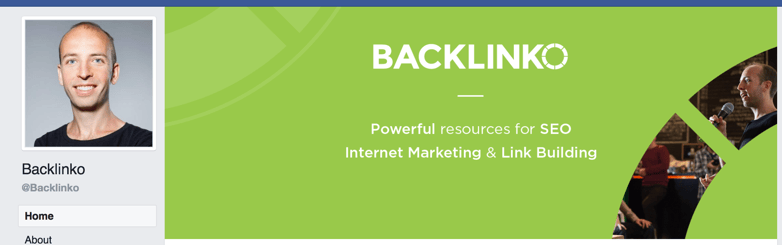
Their cover photo explains exactly what they do.
Unfortunately, many businesses are still missing out on a big opportunity. They don't use their covers to promote regular content, such as blog posts, infographics and videos.
So, consider changing your cover photo for each of your posts or events. It's not that hard, especially with the help of all the free online tools available to marketers.
So, consider changing your cover photo for each of your posts or events. It's not that hard, especially with the help of all the free online tools available to marketers.
3. Engaging Employees
Social media platforms offer a great opportunity for organizations to engage their employees in a social media marketing campaign.

Yet, so few businesses are tapping into the huge potential that comes with employee advocacy.
Just imagine what will happen if all of your employees take part in a promotional campaign and share your content with their 100+ friends.
That's a lot more eyes on your content and a huge increase in the organic social media reach.
Just look at all the big companies, such as Facebook. They all have employees who are constantly advocating for the brand and promoting their content.
You don’t see promotions about the growth and activities on Facebook only on the main fan page. The team is also sharing news and opinions that multiply the social media reach.
You can do the same.
But never force your employees to advocate for your brand. Find those people who'd love to do it, and give them a chance.
Paying for ads is cool and maintaining Facebook fan pages is necessary. But, that’s not where organizations should stop. Getting team members to promote content is crucial!
But never force your employees to advocate for your brand. Find those people who'd love to do it, and give them a chance.
Paying for ads is cool and maintaining Facebook fan pages is necessary. But, that’s not where organizations should stop. Getting team members to promote content is crucial!
4. Surveying the Audience in Real Time
 Have you ever wondered why successful organizations are doing surveys?
 There are many reasons for it:
- Surveys let them get info about the audience’s perception of the products or services
- It’s really easy for an organization to conduct a survey
- The info a survey provides lets the organization make informed decisions
The good news is that surveys and survey requests are no longer limited to email. Companies can now survey their audience in real time via social media.
That means that a business can get instant feedback with a simple poll that asks a critical question.
So, don't be shy: ask away!
It's a great way to get your audience engaged (most people love to vote and answers surveys on social). At the same time, it's a wonderful opportunity to gather valuable information about your audience.
That means that a business can get instant feedback with a simple poll that asks a critical question.
So, don't be shy: ask away!
It's a great way to get your audience engaged (most people love to vote and answers surveys on social). At the same time, it's a wonderful opportunity to gather valuable information about your audience.
5. Combining Paid and Organic Marketing Strategies
 The era of TV commercials and other old-school methods is long gone.
Not only is social media advertising much cheaper than all the old methods, but it's also more targeted, and therefore- more effective.
Reddit, Facebook LinkedIn, Twitter, Instagram, and Pinterest all have advanced advertising platforms. They enable companies to reach the right target audience.
Paid ads should not to be neglected.
However, you should strive to combine them with organic, free marketing strategies.
Share blog posts, long-form content, unique images, and direct communication with the audience.
When combined with paid ads, these strategies will lead to inevitable success.
Paid ads should not to be neglected.
However, you should strive to combine them with organic, free marketing strategies.
Share blog posts, long-form content, unique images, and direct communication with the audience.
When combined with paid ads, these strategies will lead to inevitable success.
6. Publishing Long-Form Content on Social Media
 Looking at Twitter, it's easy to assume that social media is all about being brief and cool.
 But that is not always so.
LinkedIn, for example, has its own publishing platform that allows users to post long-form content.
Facebook also allows you to write huge status updates. You can tap into these Facebook notes in order to share long-form opinions that the audience will easily find.
Social media platforms give companies unlimited space for sharing news, articles, promotional messages, and opinions.
It’s about time everyone realizes that.
Turning every single of your posts into an essay is not a good idea, but that doesn't mean you shouldn't share long-form content once in a while.
Social media platforms give companies unlimited space for sharing news, articles, promotional messages, and opinions.
It’s about time everyone realizes that.
Turning every single of your posts into an essay is not a good idea, but that doesn't mean you shouldn't share long-form content once in a while.
7. Having a Unique Strategy for Each Network

Even if you have profiles on several platforms, it's wrong to assume that your audience is the same on each network.
Still, most organizations decide to neglect the fact that the audience on each network is unique.
You've probably seen Instagram photos posted on Facebook, Twitter, Pinterest, and all other places at once.
Or how about brands that share the same piece of content and text on all platforms? There's so much of that!
But that's a big mistake.
Not only do the formats and dimensions differ for different platforms, but so do audience interests.
According to marketers at Essayontime, each network demands a unique strategy - one that is developed according to the special vibe the audience has.
Still, most organizations decide to neglect the fact that the audience on each network is unique.
You've probably seen Instagram photos posted on Facebook, Twitter, Pinterest, and all other places at once.
Or how about brands that share the same piece of content and text on all platforms? There's so much of that!
But that's a big mistake.
Not only do the formats and dimensions differ for different platforms, but so do audience interests.
According to marketers at Essayontime, each network demands a unique strategy - one that is developed according to the special vibe the audience has.
8. Pinning Webinars and Blog Content on Pinterest
 Pinterest is a very powerful promotional platform.
Bloggers, makeup artists, fitness gurus, and chefs are using the full potential of Pinterest to promote their work.
Organizations, however, are lagging behind.
It’s time to stop overlooking Pinterest as a promotional platform.
If you pin images of your blog posts or webinar info pages to Pinterest, you're giving people a chance to repin that content.
By re-pinning they're making that content available to all of their audience and giving themselves a chance to check it out again later.
Who knows - they just might come back to it when they have time and follow the call to action.
Organizations, however, are lagging behind.
It’s time to stop overlooking Pinterest as a promotional platform.
If you pin images of your blog posts or webinar info pages to Pinterest, you're giving people a chance to repin that content.
By re-pinning they're making that content available to all of their audience and giving themselves a chance to check it out again later.
Who knows - they just might come back to it when they have time and follow the call to action.
9. Messaging Influencers and Followers

Many businesses are finally realizing and tapping into the power of influencer marketing.
If yours isn't one of them, it's time to start!
After all, if your build a relationship with an influencer you can ask them to promote your campaign and thus make your content available to their huge audience.
Of course, you can do that by posting high-quality content and waiting for influencers to react to it, but you'll probably have to wait a really long time...
The effects of influencer marketing can be much greater if you contact the influencer directly.
All social media platforms allow you to reach these industry leaders and engaged members of the community.
It’s easy to contact them and negotiate an offer, so give it a shot.
If yours isn't one of them, it's time to start!
After all, if your build a relationship with an influencer you can ask them to promote your campaign and thus make your content available to their huge audience.
Of course, you can do that by posting high-quality content and waiting for influencers to react to it, but you'll probably have to wait a really long time...
The effects of influencer marketing can be much greater if you contact the influencer directly.
All social media platforms allow you to reach these industry leaders and engaged members of the community.
It’s easy to contact them and negotiate an offer, so give it a shot.
10. Focusing on the LinkedIn Profile
 When marketing experts want to promote an organization, they usually use Facebook, Twitter, and Instagram.
It’s strange that so many overlook LinkedIn, because they think that it’s purpose is to connect job hunters with employers.
But LinkedIn is a very influential network.
When each employee promotes the organization through their LinkedIn profile, the organization instantly gains more authority.
LinkedIn also has a great publishing platform you can tap into to share your content.
And there are lots of LinkedIn Groups where professions go every day to exchange great content.
11. Recruiting Skillful Employees

Companies invest a lot of money in proper recruiting.
That's understandable: in a competitive market, attracting high-impact employees is a hard goal to reach.
Through social media, however, organizations can avoid the expenses of hiring headhunters.
When you’re active on different platforms, it’s easy to locate outstanding candidates who are already engaged with your brand.
That means that you can attract potential hires just by promoting your vision and organizational culture via social media.
You can also use social media to gain more info about them, both from their "about" section and from what they share.
So, go out and look at who's interacting with your brand. Your next employee might be among them.
That's understandable: in a competitive market, attracting high-impact employees is a hard goal to reach.
Through social media, however, organizations can avoid the expenses of hiring headhunters.
When you’re active on different platforms, it’s easy to locate outstanding candidates who are already engaged with your brand.
That means that you can attract potential hires just by promoting your vision and organizational culture via social media.
You can also use social media to gain more info about them, both from their "about" section and from what they share.
So, go out and look at who's interacting with your brand. Your next employee might be among them.
Final Thoughts
All organizations use social media for marketing. Are they doing it the right way?
Not always.
It’s time to realize that social media promotion needs a strategic approach. Businesses should create multiple touch points with potential consumers.
So, if you start implementing these 11 social media strategies, you'll create a more complete campaign that'll reach more people.
Now over to you:
Do you have other tips to share with us? Feel free to share!
Not always.
It’s time to realize that social media promotion needs a strategic approach. Businesses should create multiple touch points with potential consumers.
So, if you start implementing these 11 social media strategies, you'll create a more complete campaign that'll reach more people.
Now over to you:
Do you have other tips to share with us? Feel free to share!
By Joan Selby
Friday, 3 February 2017
Why Facebook Ads Will Make You Successful in 2017 & Beyond


Facebook Ads are going to drive more leads for your business in 2017 than any other paid channel. You’ll need to have the right strategy and execute with agility and precision, but right now there is a massive Facebook opportunity for inbound marketers. An opportunity that if you take advantage of now, will pay off for years.
Technology changes fast but that doesn’t stop us from missing big shifts. This is because they never happen all at once, but every once in awhile you can catch a glimpse of change in motion. Right now, this is the case with Facebook.
Download our data-backed tips for creating the optimal Facebook Ad.
Facebook’s growth has been tremendous -- and I don’t just mean the number of people who have a Facebook profile. Its most exciting growth has come from its network:
- Facebook (desktop/mobile): 1.18 billion daily active users, as of September 2016.
- Instagram: 600 million users, as of December 2016 -- with 50% of all users following a business.
- Facebook Messenger: Over one billion monthly active users, as of July 2016.While those are a big numbers, it’s just the visible part of the iceberg. What’s fascinating is the amount of time people spend with this network. In May of 2016, Zuckerberg announced that globally users spend 50 minutes a day on average with Facebook properties. That is head and shoulders above any other tech property -- and almost as much time as people spend eating and drinking each day.
But Facebook has always had reach. You know it can provide that. What’s new is a subtle shift towards solutions that benefit B2B, midmarket companies.
Why You Should Invest in Facebook Ads
Mobile Marketing Silver Bullet
According to research from Google B2B buyers have increased the amount of mobile research they do by 91% year over year throughout the B2B purchase path. Facebook has cracked the code on mobile marketing.
This is important because as consumers have shifted to mobile over desktop so have B2B buyers. They now do more research, reading, and work on their phones -- and spend time on the Facebook app/Instagram/Messenger.
With Facebook you can now reach these people with slick ad units like Lead Ads that promote your event or white paper and allow users to sign up with just a few clicks.
Facebook’s Lead Ads eliminate the need for users to fill out a form by using pre-populated data and cut out the landing page step, both of which skyrocket conversion rates and actually make the mobile ads effective for B2B marketers.
The news and information site theSkimm used Facebook Lead Ads to attract new subscribers for its daily newsletter, seeing a 22% increase in lead quality at a cost per acquisition of just $1-2.
If you have a longer sales cycle, you need to influence decision makers wherever and whenever they do research. That means you need a strong mobile strategy. Right now that strategy can simply be Facebook paid and organic.
The Best Ad Technology Available
Facebook offers some of the most powerful, innovative and advanced ad units and targeting. But they present it in a way that makes it easy for marketers to execute. Ads are built around your goals, which makes getting started simple for inbound marketers. Let’s dive into some of their best tech for B2B.
Targeting: Facebook puts heavy duty technology to work to help you reach and connect with the most valuable people for your business. Most marketers start by targeting Friends of your existing users, visitors of your website, or people in your CRM lists. These options can be very powerful but what may be most effective is Facebook’s audience expansion tool Lookalike Audiences.
Lookalike Audiences uses machine learning to help find you valuable potential customers who are similar to those who visit your site or are already in your CRM. So you can upload a list of your most valued customers from your CRM and have Facebook hunt down similar users based on their rich data.
Ad Units: Facebook is also rolling out better B2B ads, like Lead Ads and Canvas. I mentioned them earlier but Lead Ads are worth a look from any B2B or lead focused marketers.
Canvas ads can also be great for B2B and are a storyteller's dream. They expand into beautiful pieces of creative that allow you to deliver a great marketing via mobile. If you’ve got a more complex product or one that really shines through video consider Canvas.
Instagram Ads: Similar to Canvas the Instagram Ad format is a big, beautiful ad unit. These ads lend themselves to powerful ad creative with strong CTAs. While Instagram may feel more B2C, B2B brands are already having success on the platform.
In the big picture, Facebook is focusing more on solutions that help smaller, B2B companies. This is great news for inbound marketers.
(HubSpot customers: Facebook Ads now integrate with HubSpot, providing you automatic and precise ROI reporting on all your Facebook and Instagram Ads.)
The Future of Facebook Ads
Facebook ad solutions will help you grow today. But investing in Facebook now also sets you up to succeed in the future. By all measures, Facebook has been extremely successful over the last few years but don’t expect it to rest on its laurels. When people all over the world go online today, they go to social, and spend the majority of their time with a Facebook property, but that’s just the start.
Video Ads: Facebook is also investing heavily in video, looking to steal time and attention away from TV and movies. It’s easy to imagine a future where Facebook is the most watched video channel, larger than cable, YouTube, or Netflix.
It already has some powerful video solutions but expect Facebook to grow video ads and get more creative. If video and video ads aren’t yet a part of your B2B marketing strategy now is a good time to consider it.
Messaging Ads: Globally, Facebook Messenger and WhatsApp (owned by Facebook) dominate the mobile messaging app space. Messaging is an area that is growing like wildfire and quickly replacing email, text and voice calls for millions of people every day.
As this trend continues, Facebook (Messenger/WhatsApp) could become the main way we all chat with our friends and family on our phones. This is larger an untapped resource for Facebook in terms of ads. It’s a little further out but paying to have your Facebook Messenger B2B bot placed prominently as an option for your target audience could happen.
Virtual Reality Ads: In 2014, the company bought Oculus Rift -- the leader in virtual reality technology. This along with its play into video puts Facebook in a better position than any other tech company to lead this format if it becomes the default way to watch movies or play video games. It also opens up a new ad powered revenue stream.

Source: ABC News
Ads Powered by Artificial Intelligence: In the last few years ad targeting, bidding and buying has become much more automated and machine powered.
Programmatic ad buying companies are growing fast and Google, Facebook and others are putting more and more machine learning into the targeting and bidding process. This trend should continue and it is something most marketers should take advantage of. When it works, this automation means less work for you with better results.
Facebook already does this and will look to get more sophisticated with the application of AI for ads. It’s hard to say exactly how ads will fit into all of these bigger best for Facebook but it’s been a very successful model for them. And while it all may feel a little foreign or uncomfortable, the rules of inbound will still hold up as Facebook changes the landscape of marketing.
This is true for ads. Ads haven’t always been part of the inbound playbook, but due to the innovation from Facebook and other ads can be very help and not interruptive. We also know the combination of ads and inbound works.
Thursday, 2 February 2017
3 reasons why you can safely ignore your competitors’ traffic metrics
3 reasons why you can safely ignore your competitors’ traffic metrics
Competitive analysis can be helpful, but columnist Dianna Huff explains why it's important not to get too focused on your competitors' performance.
Website traffic is one of those metrics small business owners use to determine if their website is “working” — along with the number of inquiries, leads or sales they get from it. Traffic is also a metric that gets a lot of hype; you can find millions of articles explaining how to increase website traffic.
 In addition to looking at your own traffic, you can use tools that tell you how much traffic your competitors are getting. When small business owners see this information, they get concerned because generally, the traffic numbers are sometimes very high — or at least higher than what they’re getting.
As one business owner said, when an agency presented competitor traffic data to him, “All I could think, when I saw the data, was, ‘They’re eating our lunch’ in terms of sales.”
As I explained to him, however, these tools don’t tell you the full story. They don’t tell you, for example, whether the traffic is the right kind of traffic or if the traffic is resulting in inquiries. And, they certainly don’t tell you if the business is meeting its sales and marketing KPIs.
Not all traffic is created equal
Back around 2003 or 2004, Nickelodeon, the TV network, created this ingenious marketing campaign for the animated show, “Jimmy Neutron Boy Genius” (which my then six-year old son watched faithfully).
 The marketing campaign, which reached kids through the TV show, told them to look for special game codes on product packaging. These codes could then be used in the games featured on the show’s website. Then each week, players’ activities would be featured on the TV show.
I found this campaign, and my son’s active participation with it, so remarkable, I wrote an article about it for my newsletter and then posted the article to my website.
Although this was back in the day before social media, blogs and so on, traffic to my website skyrocketed within a couple of weeks. Why? That article was showing up in searches for “Jimmy Neutron game codes.” For a couple of months, I watched this traffic pour in — but ultimately, I made the decision to take the article down.
Why? This was back in the day before Google’s “Not Set / Not Provided,” so I could see exactly which search queries were driving traffic to my site. The search phrase “Jimmy Neutron game codes” didn’t exactly align with the keywords used by people looking for a B2B marketing consultant.
I can list lots of other examples like this, but I think you get the picture. High traffic doesn’t necessarily mean the right kind of traffic.
High traffic doesn’t always translate into inquiries
 Last year, my company conducted a website and marketing audit for a small business owner concerned about the lack of inquiries. Traffic to the website was healthy — over 9,800 sessions a month — because the company was very diligent about creating content.
One of the problems, however, was that 65 percent of the traffic was due to blog posts, and of the hundreds of posts created over the years, four were responsible for 36 percent of overall traffic. While these posts were related to the service offerings of the business, they were also the type of “how to” post where a person could use the information without taking any further action with the company.
Hence, the content wasn’t helping with real inquiries — except the occasional newsletter subscription.
I’ve seen this happen over and over again with small business websites — and even with the Huff Industrial Marketing (my company) website, too. One year, for example, I wrote a blog post listing over 50 ways to drive traffic to a website. That post was picked up by numerous SEO practitioners and marketers, and over time, it became the number one traffic generator to the website — accounting for over 50 percent of traffic.
The problem, however, was it didn’t result in one inquiry, and all that non-targeted traffic was skewing the data in Analytics. We finally deleted it in early 2016, and at the same time, began creating content more in line with our client base. Yep, we took a huge hit initially, but it was the right decision. Traffic is up again — as are inquiries.
You have no idea what your competitors’ marketing strategy and business goals are
 Because we provide marketing strategy for our small industrial manufacturing clients, we’re often privy to their business plans. These plans typically have a main objective: to grow the business to X number of dollars in five or seven years. To reach this objective, the plan will list various things the company will do: improve quality, enter a new market, introduce new products, replace antiquated equipment with automation and so on.
Thus, we base recommended marketing strategies on our clients’ business goals.
When you run reports using the tools available and then see your competitors and their (higher than yours) traffic numbers, what you’re viewing is data that is absolutely meaningless. Unless you have the company’s business and marketing strategy in front of you, you have no idea what the company’s KPIs or targets are, or if the traffic is meeting them or not.
And, since this data lacks context, basing your marketing strategy on it is a sure recipe for marketing disaster.
In conclusion…
Viewing metrics about your competitors’ website traffic shouldn’t be used as an indicator for deciding how to proceed with your marketing strategy. One, you have no idea if this traffic is “working” or not; two, you don’t know the reasons why the traffic might be higher than yours; and three, the traffic number itself is meaningless because it’s taken out of context.
Instead of focusing on your competitors and their traffic numbers, focus instead on your marketing. Rigorously track and measure your marketing tactics to determine what works — that is, which tactics result in inquiries that become sales — and then let go of the stuff that doesn’t work (even if everyone else is doing it). You’ll be much happier, and you’ll look really smart, too.
Tuesday, 31 January 2017
Best marketing strategy ever! Steve Jobs Think different / Crazy ones sp...
Think Different. Arguably the best marketing strategy of all time. What do you think? Still gives me goosebumps.
Subscribe to:
Posts (Atom)